When it comes time to talk about fishing at Sport Fish Panama Island Lodge, we often use the phrase, “The Gulf of Chiriquí is home to perhaps the best combination of inshore and offshore fishing in Central America.” We’ve talked about this in magazine articles, at boat shows, with prospective guests, and at our booths in hunting and fishing shows across the country.
“The Gulf of Chiriquí is best combination of inshore and offshore fishing in Central America.”
If you think about it long enough, that’s a pretty bold claim. There come, however, periods like the second half of March 2026 that illustrate its truth.
Weeks like we’re having at the lodge lately not only bolster this claim, but make it such that we should probably provide some context. It’s not just that we catch many types of fish, but we also catch big ones. This is the interesting thing about the Gulf of Chiriquí.
What follows is context for what makes the Gulf of Chiriquí such a uniquely fun and well-rounded fishery. There are three areas that show just how great this place really is: inshore and offshore access, diversity of species, and trophy fisheries for some of the most exciting fish in sportfishing.
Inshore and Offshore Access
This part of the claim starts with a couple decisions and a comparison. By doing this simple exercise, you can compare apples to apples and see just how different the Gulf of Chriqui is than many other places where you might fish.

Here are the steps:
- Pick your favorite inshore target.
- Pick your favorite offshore target.
- Estimate the distance between the places where you might realistically catch each of them.
Let’s run this simple exercise for a few popular fishing destinations:
Texas
- Inshore- redfish
- Offshore- blue marlin
- Distance- 80 miles, plus or minus a few.
South Florida
- Inshore- tarpon
- Offshore- sailfish
- Distance- 5 or 10 miles, give or take. (But the sailfish might weigh 35 pounds.)
Ocean City, Maryland
- Inshore- striper (rockfish)
- Offshore- white marlin
- Distance- 50 miles, if you’re fishing an inshore canyon.
Montauk, New York
- Inshore- striper
- Offshore- swordfish
- Distance- 90 miles, give or take.
The Gulf of Chiriqui
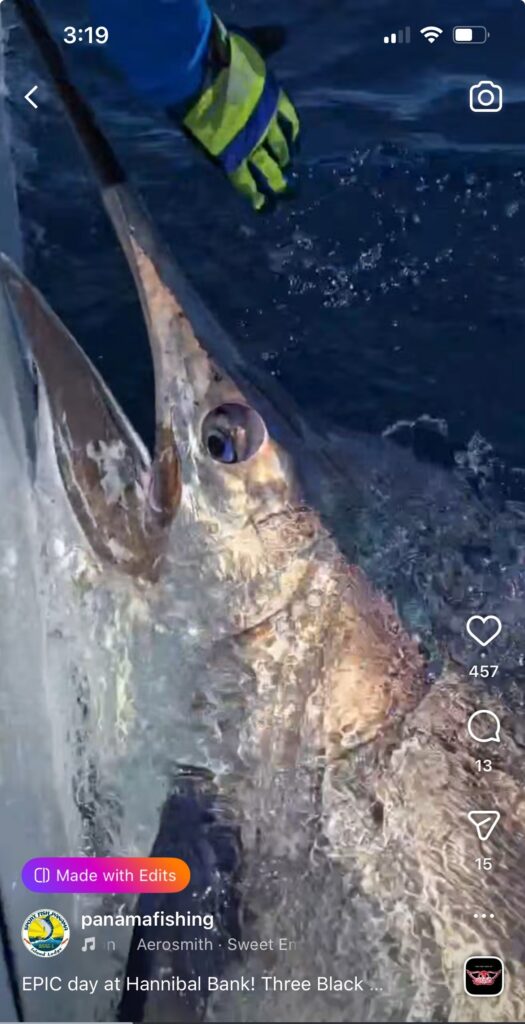
There are places in the Gulf of Chiriquí where you can catch roosterfish and black marlin within a half mile of each other. In one such place, Montuosa Island, you could transition from trolling live bonito for big roosterfish to live baiting for black marlin with barely the need to pull in your baits.
COME FISHING
This is a function of geography. Montuosa, like many islands in the Gulf if Chiriquí, rises from the depths. It sits about 38 miles south of Sport Fish Panama Island Lodge. It’s basically our back yard.
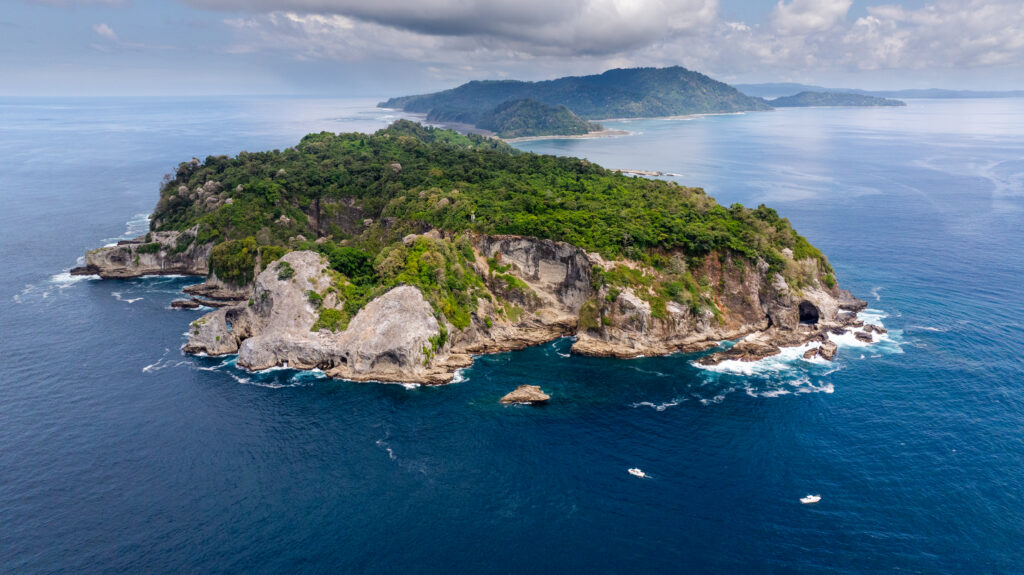
Its beautiful beaches and rocky shorelines are home to all manner of inshore fish. Roosterfish, we’ve got cubera spots. There are even wahoo here sometimes.
A half mile offshore is a high spot that we fish often. When the bait stacks up, the black marlin fishing can be really, really good here. We catch a fair number of blues here, too.
Anytime we are fishing in this spot, we’ll watch for birds that are with the tuna. Big yellowfin, lots of yellowfin, they are here quite often.
If we run a bit wide of the island, we come to the shelf. Open ocean is the haunt of the blue marlin.
If we find a bait or a floating log in deep, blue water we’ll often catch dorado, blue marlin, and sailfish. It’s not uncommon to catch black marlin this way too.
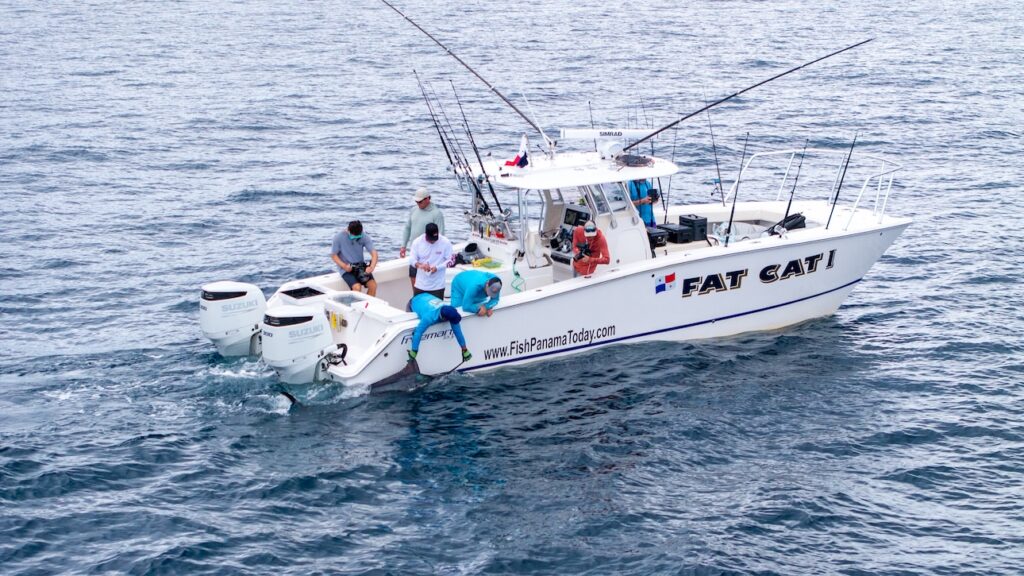
There are lots of places like this in the Gulf of Chiriquí—Ladrones Island, Coiba, Jicaron, and Jicarita. Islands that rise out of deep water. These islands have compressed habitats that offer the chance to catch an incredible variety of inshore and offshore fish—not just in the same trip, but in the same day.
Here’s how the fishing breaks down in our part of the world. Many of these islands offer all of the following:
- Close proximity to deep, open ocean— the home of blue marlin, dorado, and sailfish.
- High spots near inshore structure–the haunt of the black marlin. Look to any of the world’s black marlin fisheries—Australia, Tanzania, Panama—they all have high spots near the coast.
- High spots further inshore— the home of cubera, roosterfish, and sometimes a grouper or two.
- Beaches and rocky shorelines– roosterfish, snapper of all manner, bluefin trevally, giant houndfish (needlefish), amberjack, and lots more.
An Incredibly Diverse Fishery
If you look around social media long enough, you might notice something. Many of the places that boast about “diversity of fishing” and “catching many types of fish.”
Many of them talk about this because they might not actually catch single type or size of fish that’s exciting enough to talk about by itself. But that’s the thing about the Gulf of Chiriquí, we’re not posting pictures of 10-pound blackfin tuna laying next to barracuda and sheepshead.
.COME FISHING.
Sure, we catch an incredible variety of fish, but quite often that part of the story gets overshadowed by just how good the fishing can be here. Yesterday (March 30, 2026), Captain Shane Jarvis hosted a group of three—a father and his two teenage sons.
The father had been trying to catch a billfish for 20 years. We found a log offshore, live baited around it. First the father caught a black marlin. We put the live baits back out and a second and a third black followed, one for each son.
We find tuna frenzies here with some regularity. After partaking in this incredible spectacle—slinging poppers or live blue runners into sloshing masses of white water that might be measured in terms of number of acres—our guests might forget to mention that they went on to catch seven or eight other species.
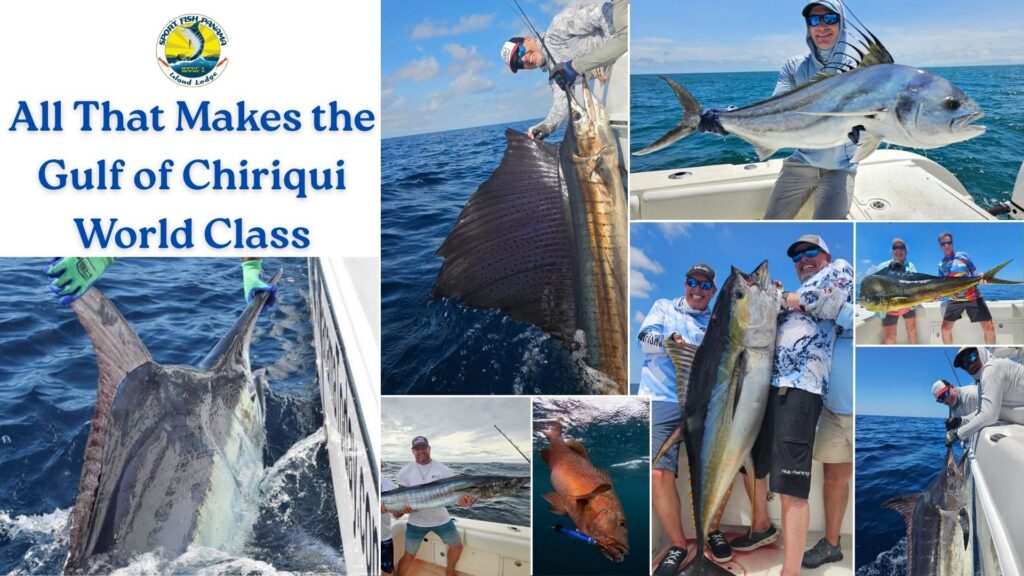
But we do, we catch all kinds of things here. Our Instagram feed is loaded with compilations of groups that have caught 12 or 15 varieties over three days fishing with us.
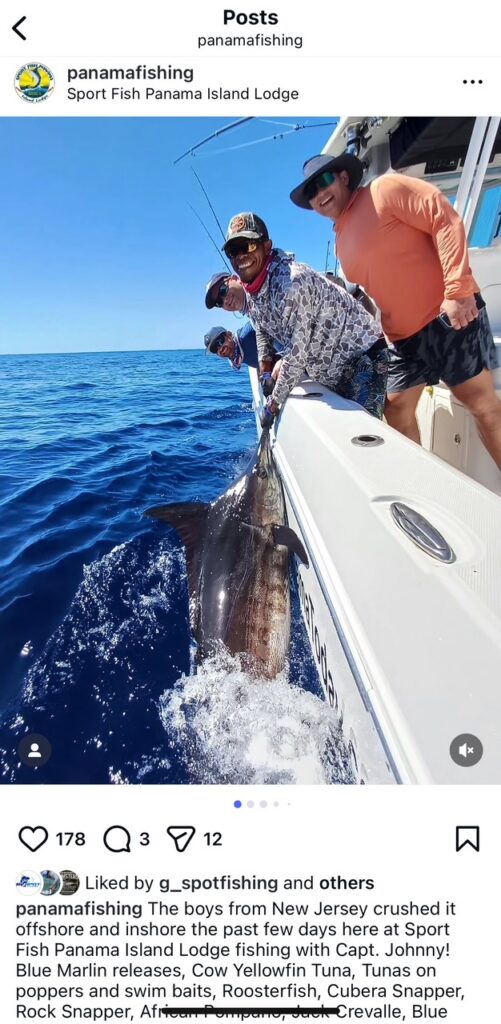
Roosterfish, cubera snapper, black marlin, blue marlin, sailfish, dorado, wahoo, amberjack, broomtail grouper, rock snapper, rainbow runner, mullet snapper, African pompano. If that weren’t enough, Captain Johnny caught a tarpon last month. Those things came through the Panama Canal.
A Really Good Big Fish Fishery
Yes, you could come to the Gulf of Chiriquí for the variety. But you could also come for the quality of the fisheries.
What follows is some context for just how good the fishing is for some of the highest profile species in sportfishing.
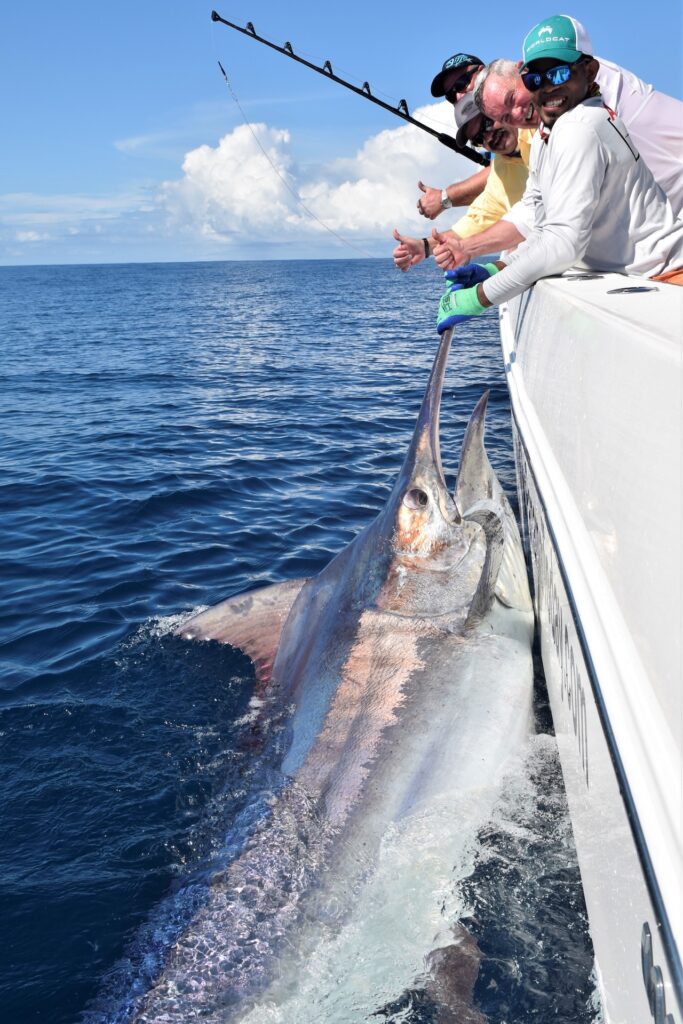
Black marlin- the Gulf of Chiriquí is among the top three black marlin destinations in the northern hemisphere. Of course there is a bit of subjectivity to “best,” but there are not many ways in which you could reasonably exclude it from a top three list.
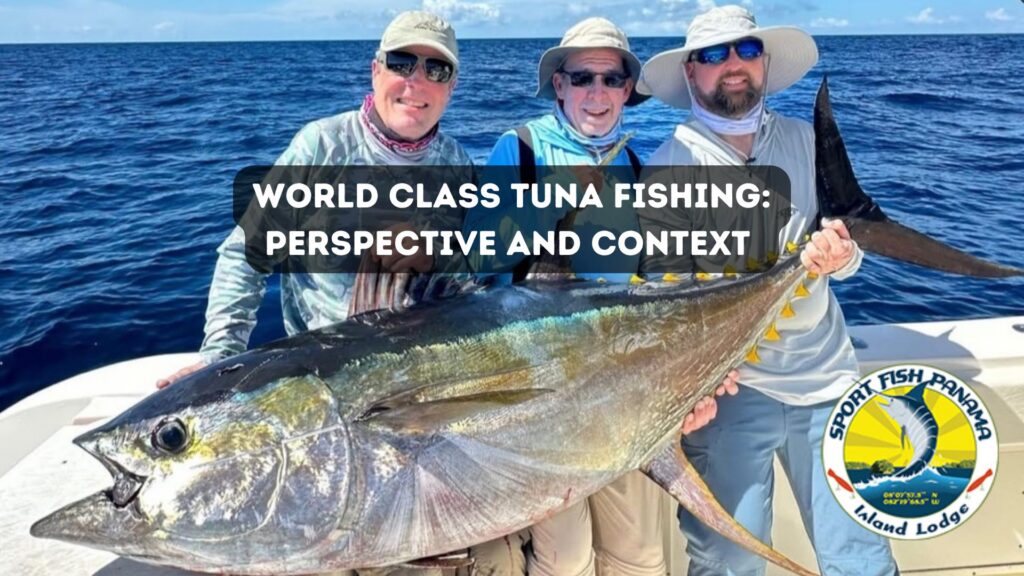
Yellowfin tuna- The Gulf of Chiriquí is the home of the tuna frenzy. We see lots of them and they are incredible. You could well make the case (and we have) that, in terms of size, abundance, and accessibility this is the best yellowfin tuna fishery in the world.
Roosterfish- roosterfish live only in the eastern tropical Pacific. They range from about the mid Baja to the northern coast of South America. The Gulf of Chiriquí sits right in the middle of their range.
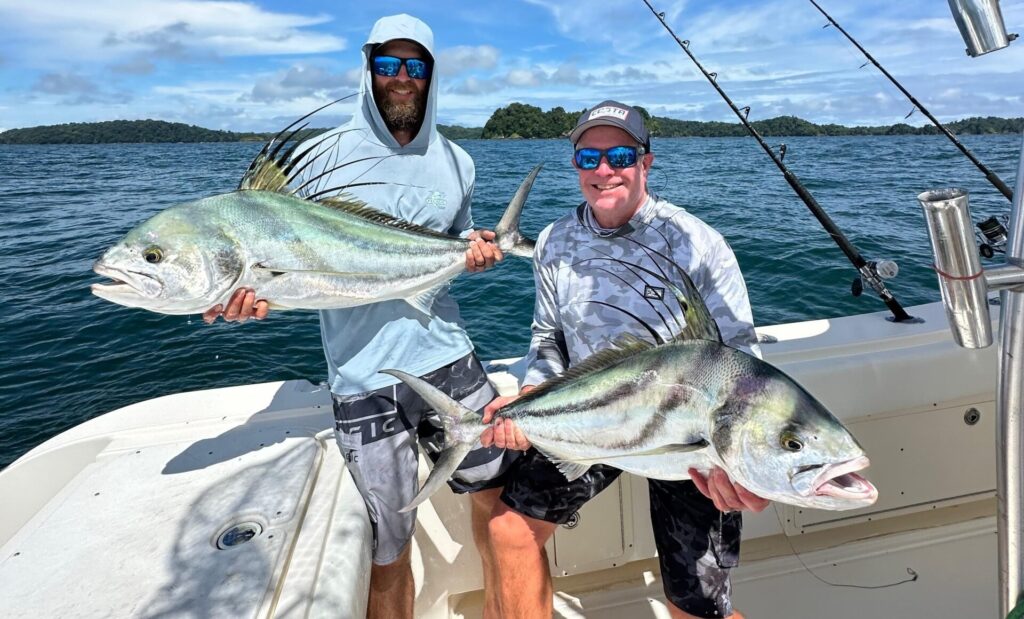
We catch lots of roosterfish. We catch them throughout the year. Catch them to 50 pounds regularly, sometimes quite a bit bigger than that. We can’t guarantee anything, but if you want to catch a big roosterfish (or your first), there are few safer bets.
Cubera Snapper- the rocky ledges of the Gulf of Chiriquí hold lots and lots of cubera snapper. We love to catch them. Drifting chunks over high spots, live baiting bonito, they are wonderful creatures. Watching a cubera blow up on a topwater looks like the explosion of a hand grenade.
If you’re after your first or your biggest, come see us. We can’t guarantee it, but there aren’t many safer bets for cubera snapper than the Gulf of Chiriquí.