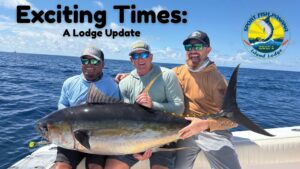

As we prepare for the annual break that we take every October, we look forward to the year ahead. We also reflect on the season that has passed.
This year has been really great for the lodge and we are thankful as can be. In terms of bookings, it has been a really good one. In terms of fishing, it has been both productive and a bit more complicated than it often is.

For much of the summer, we’ve been dealing with unusually high water temperatures. This was an El Niño year, an event that brought 90-degree water to much of the Pacific Coast of Central America. Boats fishing from Mexico to Colombia have experienced the same thing, hot water that has been around for a long time. We’re excited for the water to return to normal in the fall.
And while some days we’ve had to work a bit harder than usual or run a bit further than we might have otherwise, through it all our guests have experienced some pretty good fishing. And this got us thinking.
From the perspective of a charter fishing operation, there is much more to good fishing than luck. This becomes especially true when the conditions are tough—be it water temperature or otherwise.
Come See Us. Let’s Go Fishing
What follows is a bit of context. A bit of perspective. A bit of what goes into the art of catching fish as consistently as possible, even when things may not be exactly as you might expect.
When looking at our Instagram or Facebook feed—and all the smiling faces and big fish, this is a bit of how it happens. Context delivered in three interrelated themes.
Being Prepared For an Incredible Variety of Really Good Fisheries
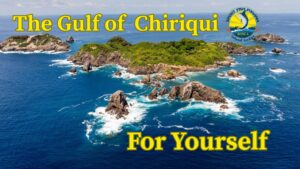
One of the best things about the Gulf of Chiriquí is that it is home to an incredible variety of inshore and offshore fisheries. Not only that, but the places where we fish offshore and where we fish inshore are close enough that we can explore them both in the same day.
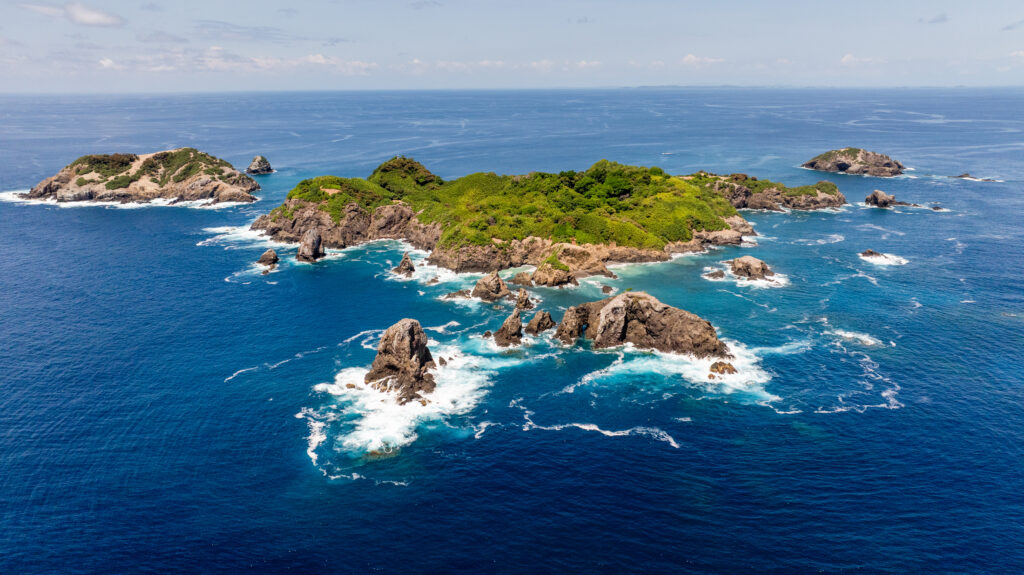
As a result, as Shane Jarvis says often, “There’s always something biting.” If the marlin fishing is slow, we can target cubera. If the roosterfish aren’t around, chances are we can find the tuna.
This diversity of opportunity, and the ability to target so many habitats and styles of fishing during a trip, is why we precisely outfit each of our boats with such a variety of rods, reels, bait, and tackle.
Every time one of our boats leaves the lodge, we are ready with jigging set-ups, heavy spinning tackle, ready to throw poppers inshore and offshore, equipped with conventional reels from 15 to 50 pounds, ready for slow trolling live blue runners to 10-bonitos, even equipped with an electric reel for deep dropping for grouper and snapper.
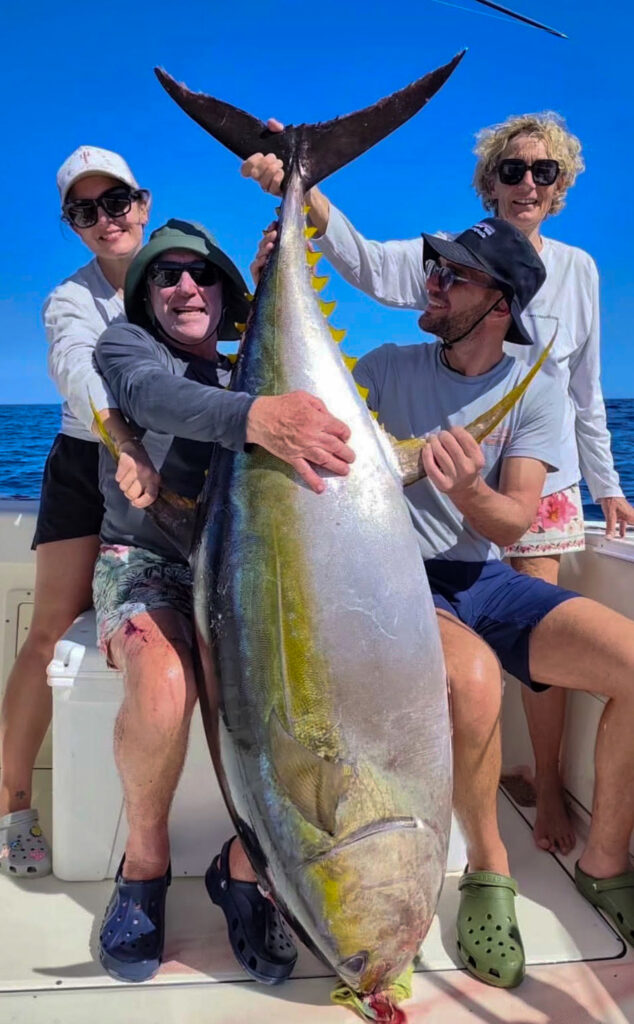
Over the course of fishing this wonderful part of the world for going on two decades, we’ve learned the necessity of being prepared. It’s taken some doing to have compiled all of this tackle and learned how to approach each of these styles of fishing, but it’s an investment of time and resources that benefits our clients directly.
Howk rods, Accurate conventional reels, Shimano spinning rods, Yo-Zuri braid, fluorocarbon leaders, swim baits and poppers, Mustad hooks. In many ways, the assortment of tackle that our boats bring to bear looks more like that of a private boat than from a charter operation.

It might look like overkill, but when you experience the variety of fisheries that we run across in a three- or four-day trip in Gulf of Chiriquí, it doesn’t take long to understand.
When the conditions are right, being so thoroughly prepared is great. When the conditions are tough, this preparation is even more necessary.
Captains Who Work Together and Can Read the Water

Being prepared, however, extends beyond just the hardware we carry. Being able to take stock of opportunity and effectively target what is biting is the hallmark of success in our part of the world.
In the Gulf of Chiriqui, this can mean knowing that wahoo bite best in channels around Islas Secas and that that bite often corresponds to a phase of the moon. It can also mean understanding which pinnacles produce best on low tide and which shelves, beaches, or ledges work best on high tide.
Come See Us. Let’s Go Fishing
It might also mean understanding the effects of current, and which way the water is moving in relation to high spots offshore. The more options there are in a fishery, the more variables there are to understand.
And because the Gulf of Chiriquí is home to such an array of structure—both inshore and offshore (there are thousands of islands and high spots here, from those just off the beach to those that arise from thousands of feet of open ocean), there is perhaps more to learn and to understand here than in fisheries that are more one-dimensional.
That is part of what makes our team special.
Each of our captains and mates (aside from Captain Shane Jarvis) grew up here. Each has grown up fishing and worked his way into the position he’s in today.

Our crews not only understand this place, and work with each other, but we work with the local commercial tuna fleet as well. This helps us know where the fish are, it makes us more efficient, and it results in less time searching and more time fishing.
Combine this local knowledge with how much our guys care about catching fish (it really means quite a bit to them, if it didn’t they wouldn’t be a good fit on our team), and you start to understand. When it’s tough, they draw from this knowledge and work harder to find the bite.
Of course we can’t guarantee fish every day. But we can guarantee that we’re prepared, that we’re dedicated, and that we understand this place and its many unique opportunities.
Tackle, Captains and Boats
It is perhaps our fleet of boats that brings all of this together. We have captains who understand the fishery and its many nuances. We have gear to execute all of the styles of fishing that are available here.

And the catamarans make it all possible. They are fast and comfortable enough to run to Hannibal Bank, Coiba Island, or Montuosa.
Once we get there, we are equally prepared to throw poppers at rocky ledges for cubera or sandy beaches for roosterfish. We are also prepared to slow troll live baits for black marlin or big yellowfin.
We can not only do each of these things equally well, but we can do them at the same time. When we’re on tuna schools, we’ll be tossing live baits out the back while casting poppers from the front.

You simply cannot do this (nearly as well) from a sportfisher. The wide beams of the catamarans make them more comfortable, spacious, and fishable than a monohulled center console.
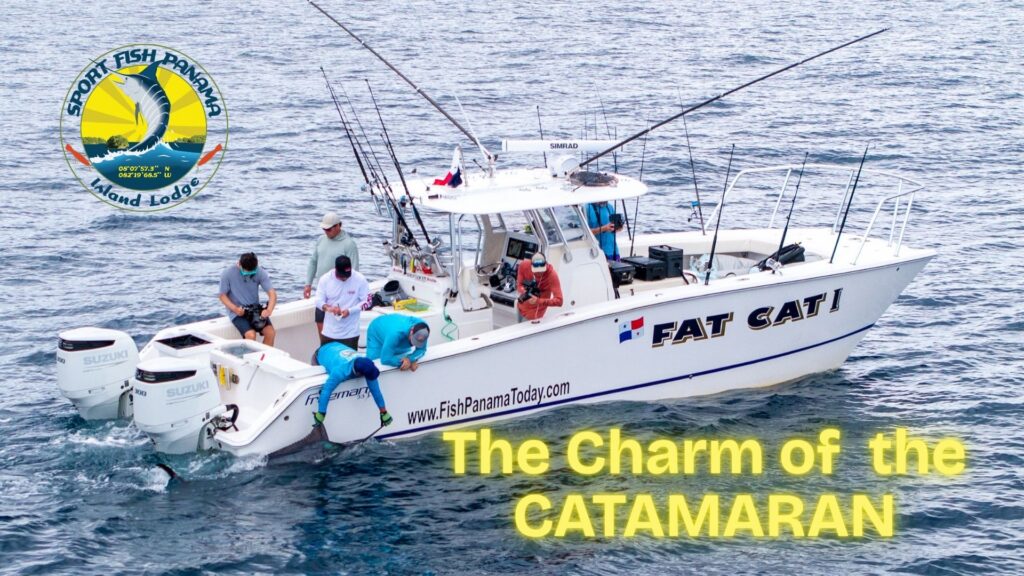
It is here, on our boats, with all of the preparation—tuna tubes for live bonito, plenty of live well capacity for blue runners and goggle eyes, outriggers for trolling, outlets to plug in the electric reels, Simrad electronics for marking bait, bottom structure, and fish, Simrad radar for locating birds (that often indicate tuna), and more—that perhaps explains the balance and consistent ability to catch fish. There is art to consistently catching fish, especially when the conditions might be a bit harder than normal.